The aim of this event is to get the Parliament members and Ukraine’s medical community acquainted with the respective international experience in this sphere and to establish broad public dialogue regarding introducing in Ukraine medical activity based on the institute of professional self-governance of doctors generally accepted in Europe and in the world.
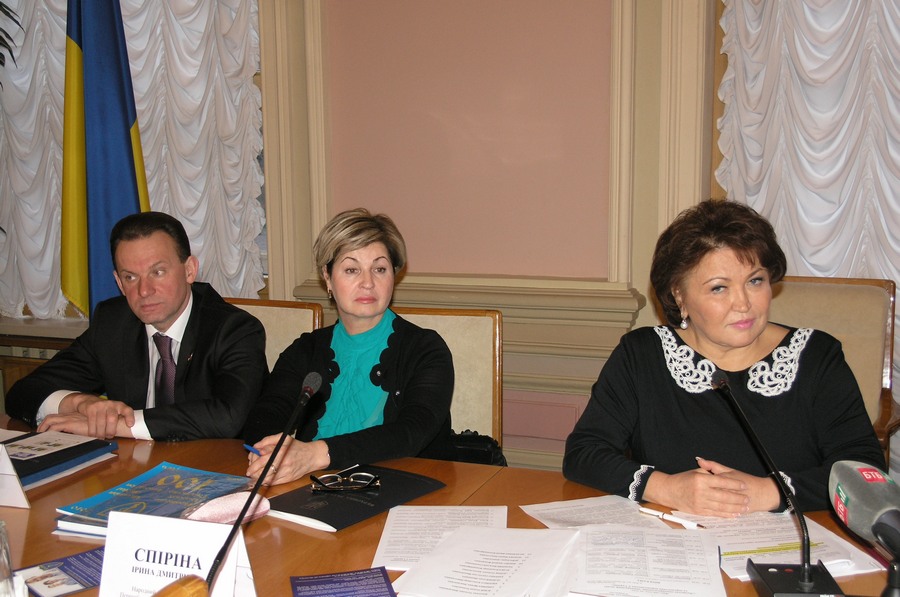
The main task of professional doctor’s self-governance is forming such model of legal relations within the framework of which every doctor bears personal responsibility for proper performance of their duties.
The Chairperson of the Committee on Public Health Tetiana Bakhteieva claimed that national self-governing doctors’ organizations function today in majority of the world’s countries and are united in the World Medical Association (WMA) founded in 1947. The highest representative body of WMA is the World Medical Assembly.
According to the Committee Chairperson, in October, 1987 the 39th Medical Assembly adopted Declaration of Madrid on Professional Autonomy and Self-Regulation. This document determined main principles of professional doctors’ autonomy and self-governance of medical profession.
T. Bakhteieva drew attention to the fact that experience of EU member-states and other countries of developed democracy has shown the practicability of applying professional self-governance for regulating not only medical profession but other professions requiring public trust (lawyers, notaries, journalists, etc.).
The people’s deputy stressed that in Ukraine medical workers still can’t adopt decisions related to regulation of medical practice.
Participants of the ‘round-table’ claimed that introducing in Ukraine medical self-government will promote efficient system of cooperation between medical workers, government and society, based on the principles and values of developed civil society.
Experience of medical self-government in Poland and Bulgaria was also discussed. The representatives of those countries talked about history and current status of professional doctors’ self-government in these countries.
Participants of the round table discussion stressed that introduction of a professional medical self-government in Ukraine will help increase management efficiency of domestic medicine in general and protection level of rights and legal interests of both doctors and patients. They believe that in order to introduce a full-fledged professional self-government in the sphere of medicine it would be expedient to adopt the respective special law.
Following the results of discussion, the decision was taken to recommend the Verkhovna Rada Committee on Public Health establish a working group involving people’s deputies of Ukraine, scientists and medical representatives in order to elaborate draft legislative initiatives aimed at introducing the national model of professional medical self-government in Ukraine.
People’s deputies, representatives of the Healthcare Ministry, as well as other central and executive authorities, the National Academy of Medical Sciences of Ukraine, experts from Poland and Bulgaria, representatives of international organizations, medical community and mass media participated in the event.